
I’ve been looking at a physical-AI company called Inner Sky Labs, and something on its website caught my attention.
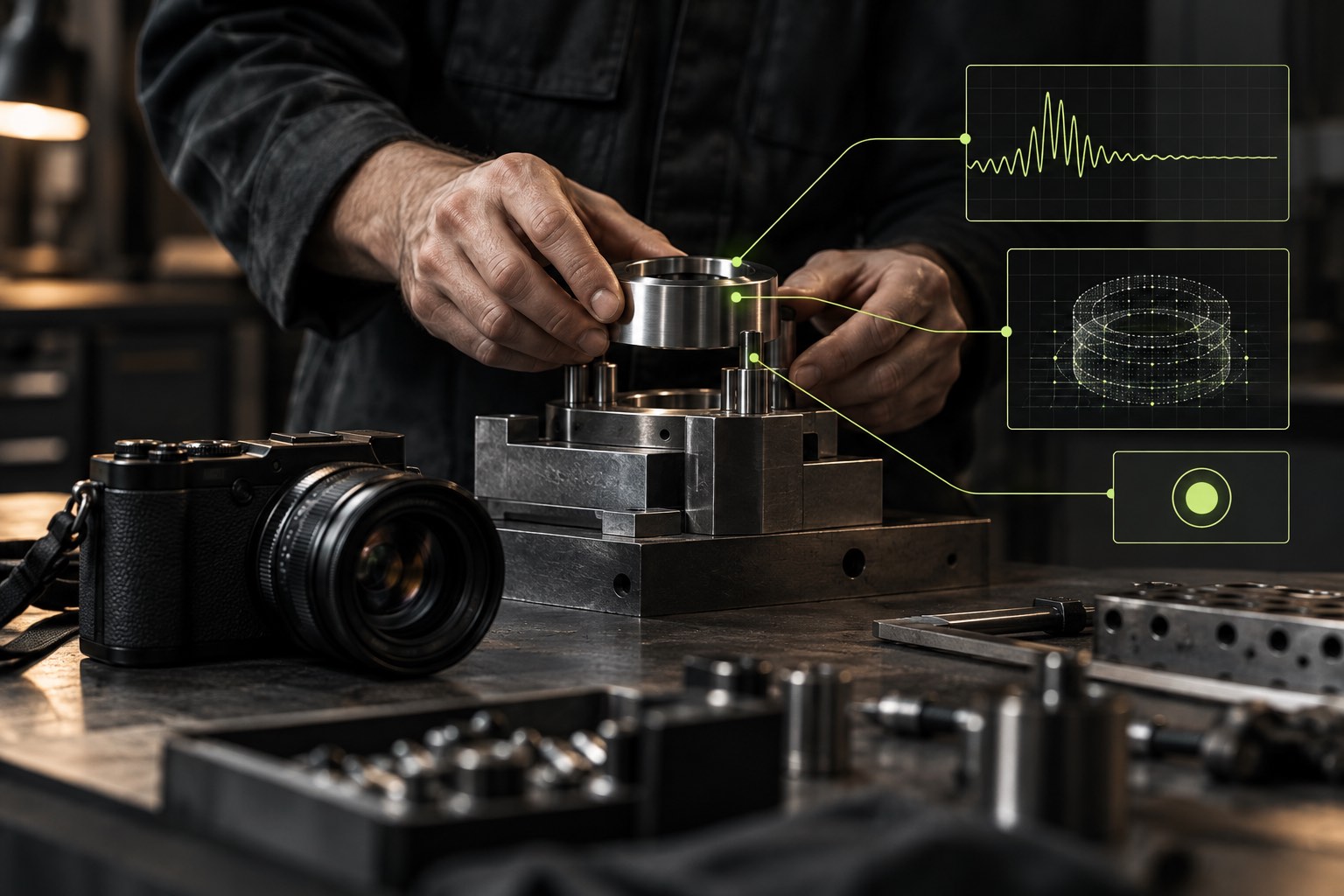
The company describes a network of instrumented manufacturing and logistics stations collecting synchronized video, depth and force measurements while work is being performed. That might not sound particularly exciting unless you’ve spent time thinking about how machines actually learn physical tasks.
I’ve been exploring the idea of installing relatively inexpensive cameras and sensors inside existing businesses. Instead of creating artificial training environments, we could collect information from real people doing real jobs, with consent and licensing agreements that allow business owners and participating workers to share in the value the data may eventually generate.
It’s an interesting model, but the more I investigate the industry, the more obvious it becomes that recording work and producing useful training data are not necessarily the same thing.
What the camera can’t tell you.
Imagine watching a technician install a component. A camera might show them picking up a part, positioning it and pressing it into place. But the video might not tell you how much force was applied, whether the part was aligned correctly, what resistance the technician felt or how they knew the installation was successful.
And if the part fails six months later, the original recording becomes considerably more interesting if you can connect it to that outcome. Those are the kinds of details a robotics developer may need to understand.
This creates a commercial problem for anyone trying to build a large collection network. The cheapest possible recording setup isn’t necessarily the most economical one if the resulting information can’t be used for the intended training or evaluation task. On the other hand, collecting every conceivable measurement could make deployment prohibitively expensive.
Work backward from the buyer.
So where’s the balance? I’m beginning to think the answer comes from working backward from specific buyer requirements rather than starting with whatever equipment happens to be affordable.
A robotics company trying to teach manipulation might need synchronized force and motion measurements. An industrial maintenance model might benefit more from equipment histories, failure descriptions and verified repair outcomes. An AI system coordinating logistics could need entirely different information: scheduling decisions, exceptions, communications and what happened afterward.
Those are three very different products. They may require three very different approaches to collecting, structuring and licensing data.
The useful question isn’t how much.
That’s where Archive Signal is heading. I still think there are enormous amounts of potentially valuable information sitting inside businesses that have never considered licensing it. But finding the information is only part of the job.
The more difficult question is figuring out what somebody can actually learn from it, what rights can be granted and whether there’s a buyer willing to pay enough to justify the work.
I’m finding that question considerably more interesting than counting terabytes.
The description of instrumented stations is drawn from Inner Sky Labs’ own website ↗, reviewed October 13, 2026. It is a company-reported description, not an independent assessment of its systems or results. No affiliation or endorsement is implied.
The collection and commercial arguments are the author’s perspective. Video can be useful on its own or with reconstructed labels; additional sensing should be justified by the intended task.
Commercial interest: Archive Signal is developing data-sourcing and capture concepts, including FIELDKIT and ToolTag, and may benefit from related engagements. This note does not announce a deployed collection network, a buyer agreement or validated dataset economics.