The judgment
behind the action.
Cues, hypotheses, decisions and corrections. What the expert noticed—and why it changed the next move.

We source hard-to-find experience for AI teams—and help businesses explore the data potential of their expertise and existing records.
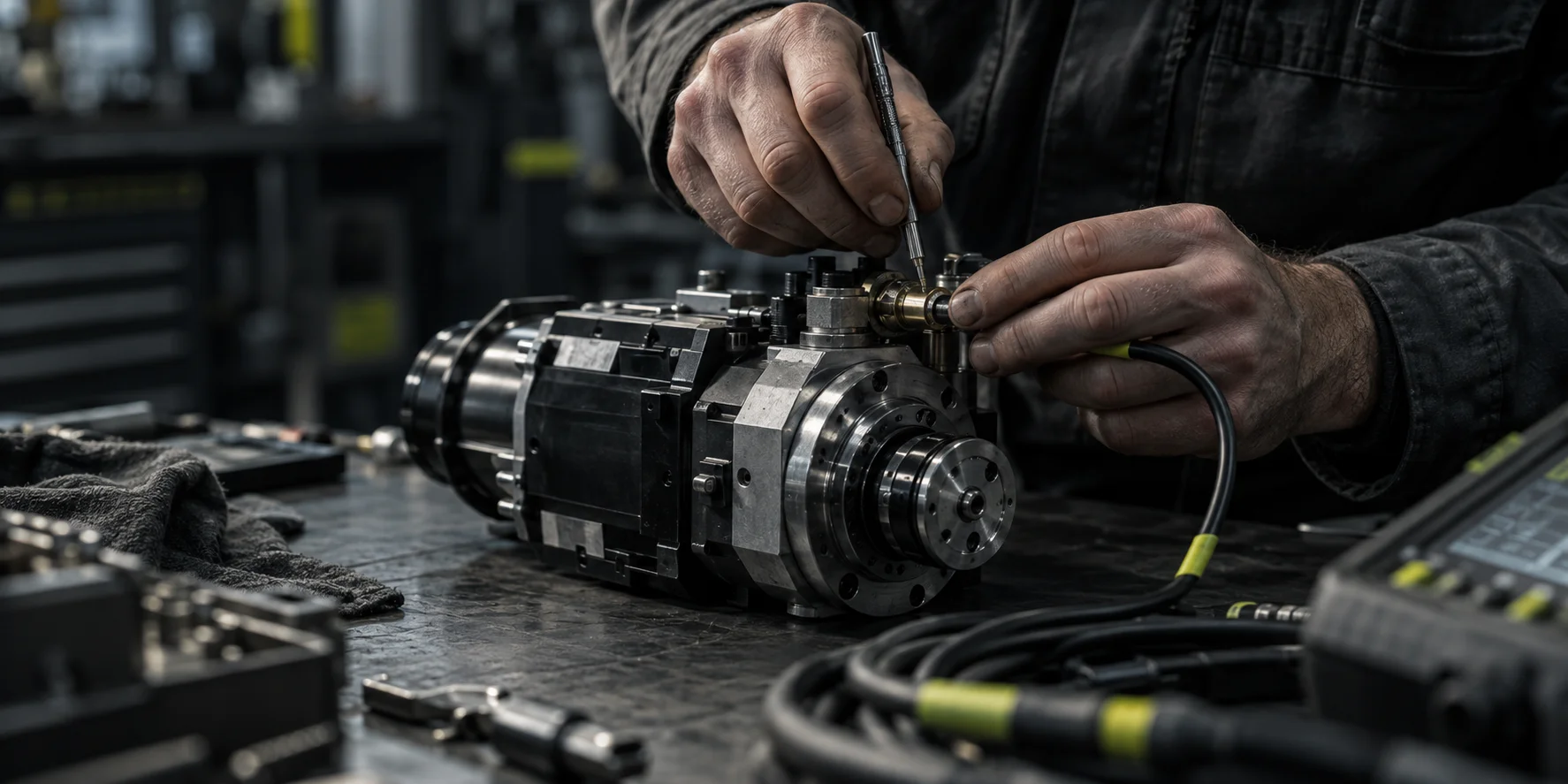
Decades to learn.
A moment to lose.
We stand between the people who do the work, the organizations that hold the records, and the teams building intelligent machines.
Tell us what your robot doesn’t know how to do. We’ll find the people who do. Start with the missing experience—not a finished specification.
Build a sourcing brief 02 / FOR BUSINESSES & EXPERT TEAMSYour people solve real physical problems. Explore a capture pilot around work already happening, with boundaries you help define.
Introduce your business 03 / FOR ARCHIVE OWNERSYears of service, customer, engineering or operational records? Describe what exists. We’ll start with an assessment, not a data upload.
Evaluate your archiveMoravec’s paradox explains the gap. Real expertise is where we begin closing it.
An expert notices the vibration before a bearing fails. Feels when a fastener begins to bind. Changes the sequence when the manual stops helping.
That is the experience we’re building a network to capture.
Cues, hypotheses, decisions and corrections. What the expert noticed—and why it changed the next move.
Worn tools, obstructed views, variable parts and interrupted workflows. The conditions that make the task hard.
Before-and-after measurements, inspections, diagnostic results and work records. Outcomes with context.
Alongside data sourcing and archive evaluation, we’re developing ways to capture expertise that isn’t yet recorded. Two projects. Different stages. Evidence before scale.
Expert actions, equipment context and verified outcomes. Planned field-capture infrastructure, built around consenting, compensated participants.
Explore the capture concept ↗Prototype developmentReal-world tool-use signals, with practical utility first. Field performance and the value of the resulting data remain to be tested.
Explore the sensor project ↗Service histories. Customer conversations. Engineering decisions. Records that connect what was tried to what happened next.
We start by understanding the archive’s structure, history and rights—then explore whether it is a fit for further evaluation. You keep the underlying records where they are.
We begin with fit and rights—not a licence or a sale. Before any buyer introduction or representation engagement, we agree our role, compensation and your permissions. A buyer referral is not the same as representing you.
Evaluate your archive No uploads. No licence granted. A conversation about what exists.How equipment, customers, conditions or decisions changed over time.
A diagnosis followed by a repair. A conversation followed by a resolution.
Who controls the records, what permissions exist and what must stay protected.
For VLA training, world models, perception, planning and evaluation—the useful unit is an episode with the right context. We work backwards from your research question.
Same symptom. Different root causes.
Capture how an expert tells them apart.
Other possible briefs: cross-threaded fastener recovery, subtle inspection decisions, or field repairs where the manual stops helping.
Human observations and robot actions are different data. Need joint states, end-effector poses or action-aligned trajectories? Put that in the brief. We scope the embodiment, sensing and alignment requirements before making a collection commitment.
Instrument the world
that already exists.
Task, embodiment, signals and an explicit bar for what counts as a useful episode.
Identify candidate businesses, practitioners and workflows. Check access, frequency and feasibility.
Agree capture boundaries, permissions and pilot acceptance before discussing a larger program.
When there is a credible fit, we scope a small first program around a handful of experts, a defined capture window, an episode manifest and agreed rights terms. Timing, volume and modalities depend on the workflow. No capture begins without consent and agreed boundaries.
[email protected] ↗FIELDKIT + ToolTagModular capture concepts designed around the work. The expertise comes first.
Drew Clement / Human founder
Archive Signal is being built by Drew Clement from Vancouver Island, after 20 years across direct-to-consumer businesses, affiliate and performance marketing, and payments.
That experience shaped the operating belief: useful infrastructure sits between the people who create value and the teams that need a better way to access it.
Building the pilot network. Starting with careful conversations.
Our voluntary pilot proposal: prove outcome-linked project records on one willing project, with governance before collection and independent long-term stewardship.
Read the Two Assets pilot proposal Explore Insights / NotesNo capture without informed consent.
No hidden recording or incidental customer capture.
No work interruption without agreement.
No licensing promise before rights are understood.
Not sure which path fits? [email protected] ↗. A non-sensitive overview is enough.